
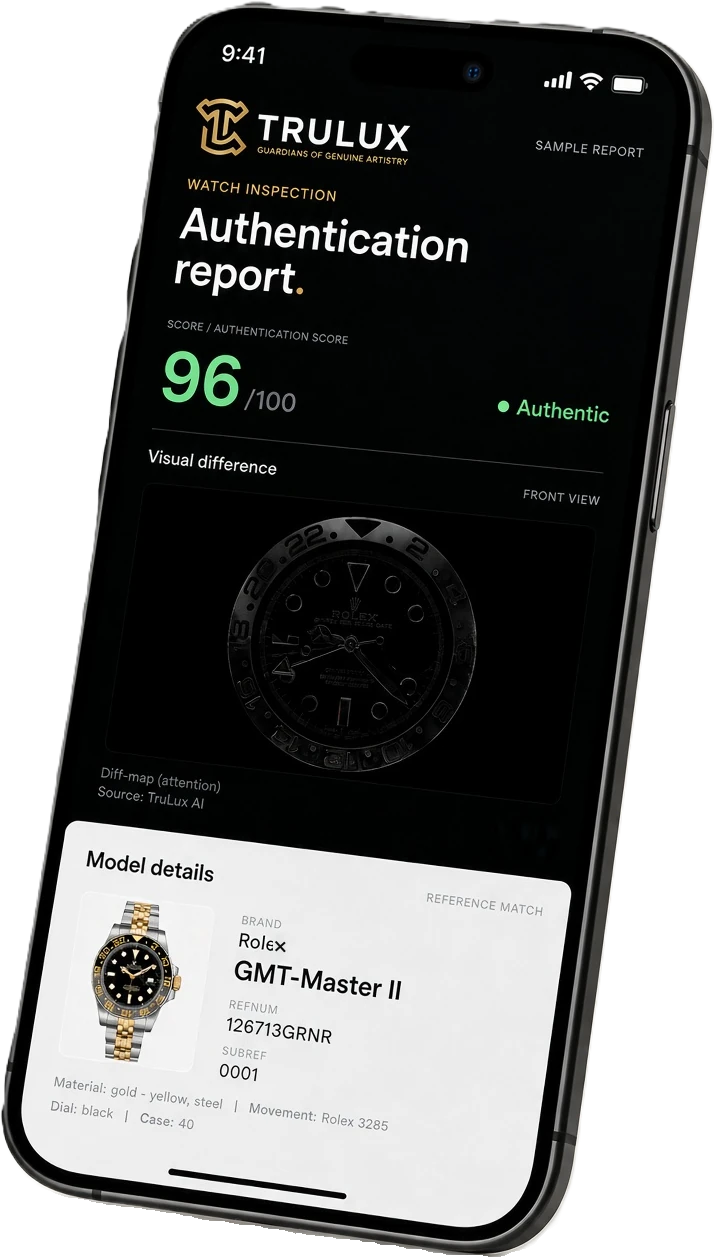
The trust layer for physical goods
Fakes now fool the naked eye, and certificates can be forged. Proving an item is real still takes an expert, a bench and a week. TruLux checks the object itself, and its components, from a few smartphone photos, so anyone can know what they’re holding before they buy, sell or insure it.

Commerce is automating. Trust is still manual.
Every other step of a sale has been automated. The one that decides whether the sale happens at all (proving the item is what it claims to be) is still a person with a loupe, and there are not enough of them.
-
A week of waiting
It is slow
A week of turnaround on a typical authentication, while the customer waits for an item they have already paid for.
-
3–5 hours, over $300
It is expensive
Three to five hours of expert time on a single item, and more than $300 once handling and logistics are counted.
-
A finite number of experts
It does not scale
Resale volume grows every year. The number of people qualified to judge an item does not, and the queue grows with every listing and every return.
-
No written standard
It is not standardised
Two experts can reach two verdicts on the same item, and neither leaves a record of how the verdict was reached or how certain it was.
What automation makes possible
Conversion
Buyers are likelier to complete a purchase when authentication they trust is part of it.*
Item value
Buyers pay more for an item when they trust the process that verified it.*
Instead of a week
A shorter sales cycle, and an answer while the customer is still in the room.
Native by design
Built to be called by software, so an agent buying on someone’s behalf can run the same check.
* Conversion and value uplift, handling time and cost from TruLux partner data and internal analysis.
Three things changed at once
Authentication has been a manual craft for as long as luxury has existed. It is becoming software now because three separate things arrived together.
Phone cameras caught up
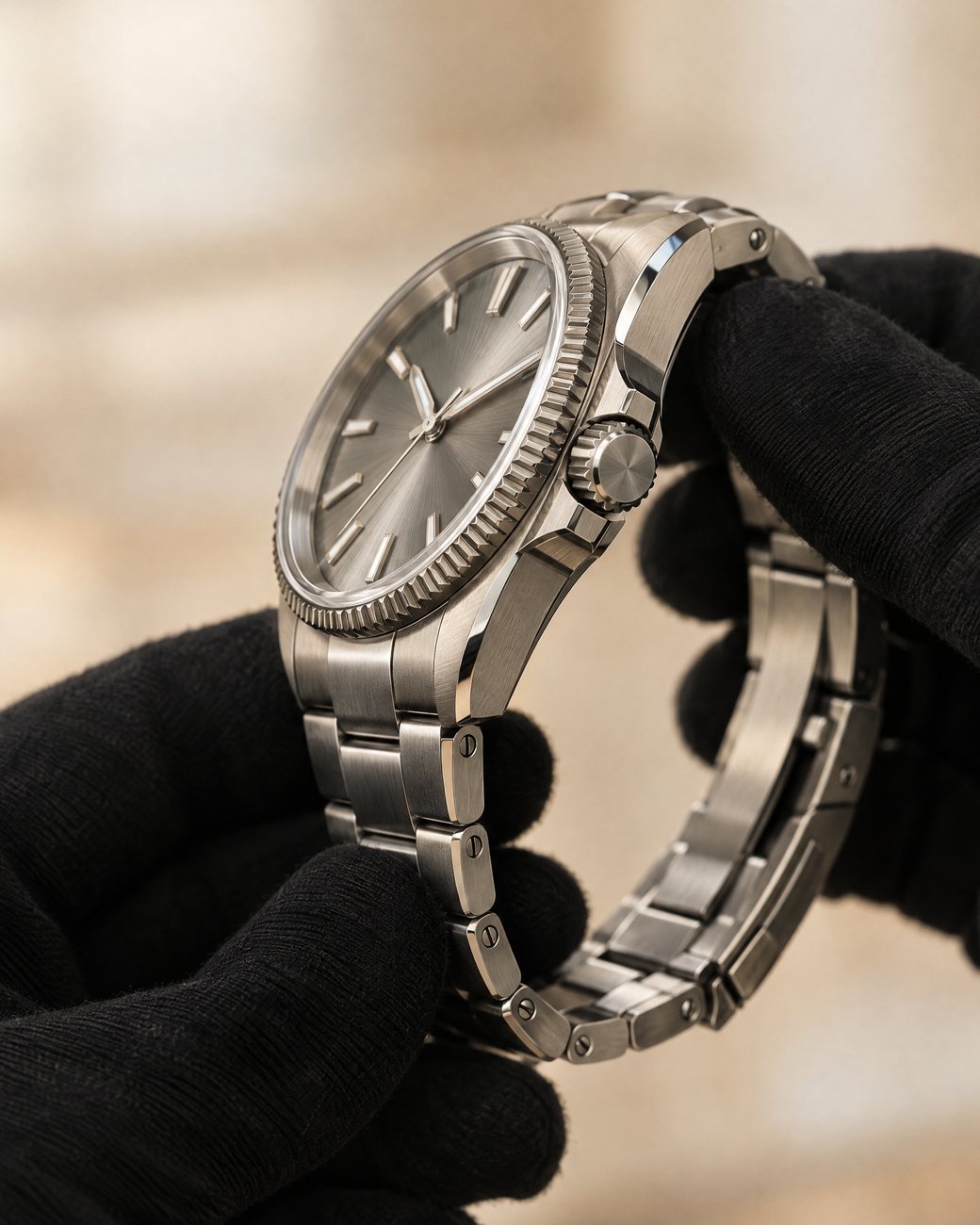
A 12MP phone now resolves the detail that used to need a loupe and a bench. The inspection can happen where the item is, instead of in a facility a week away.
Every item is getting a digital identity
The EU Digital Product Passport gives high-value goods a digital identity, phased in by product group through 2030, but the mandate is only part of it. A passport is also the channel a brand keeps after the first sale: for provenance, resale, service and reaching whoever owns the item now, where today the trail goes cold at the till. A record is only worth as much as the check that ties it to the physical object.
Commerce is becoming agentic
Software is starting to buy on our behalf. An agent cannot pick an item up and look at it, so it needs the check in a form it can run itself, and an answer it can act on.
How a check runs
Two routes through the same check: items arriving at a desk, or items leaving a production line.
Set upGood light is the only requirement. For high-volume intake, TruBox fixes it.
ScanOpen the app and follow the prompts until every angle is captured.
Read and saveA verdict for each component, stored with the item’s fingerprint.
Capture at the lineEach item is photographed as it leaves production, on the line or at final QC.
FingerprintThe scan produces a fingerprint unique to that individual item, bound to its passport.
Verify anywhereAnyone with a phone can check the item against its fingerprint: at returns, at service, at resale.
Anyone who needs to be sure
The same check, run by the people who buy, sell, insure and own the item.
Brands
Fingerprint each item as it leaves the production line, then verify it anywhere with a phone, at returns, warranty and service intake, without shipping it to an expert.
Retailers and marketplaces
Check stock at intake, so what goes on sale has been inspected component by component, and catch return fraud before a swapped item goes back into stock.
Insurance
Remote authenticity and condition assessment for underwriting, without sending an evaluator.
Asset-backed lending
Remote verification and condition data for collateral decisions.
Collectors
Inspect a piece before you commit to it, and keep the report with the item.
Owners and buyers
Check a purchase against the genuine reference while you can still return it.
Categories we check, component by component
Watches are supported today. Bags, jewellery and trading cards are on the roadmap.
Watches
Component-level authentication across the supported watch catalogue.
Bags
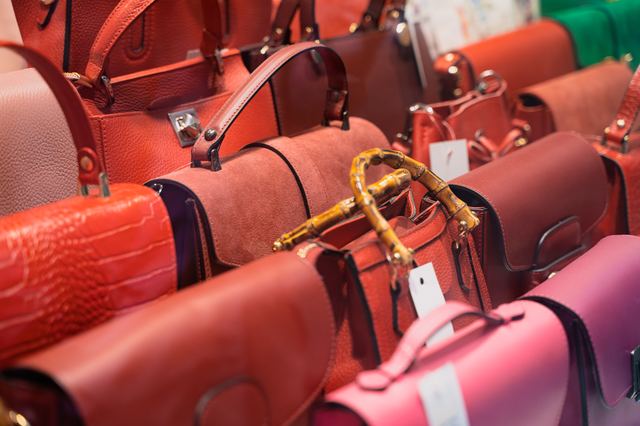
Handbags and small leather goods, checked component by component.
Jewellery
Stones, settings and hallmarks, checked component by component.
Collectible cards
Authenticity and condition checks on ungraded cards, before they go for grading.
Recent blog & news
Notes on counterfeiting, authentication technology and what is changing in resale.
Book a demo
Tell us what you need to analyse and who you are, and we will follow up.
Book a demo