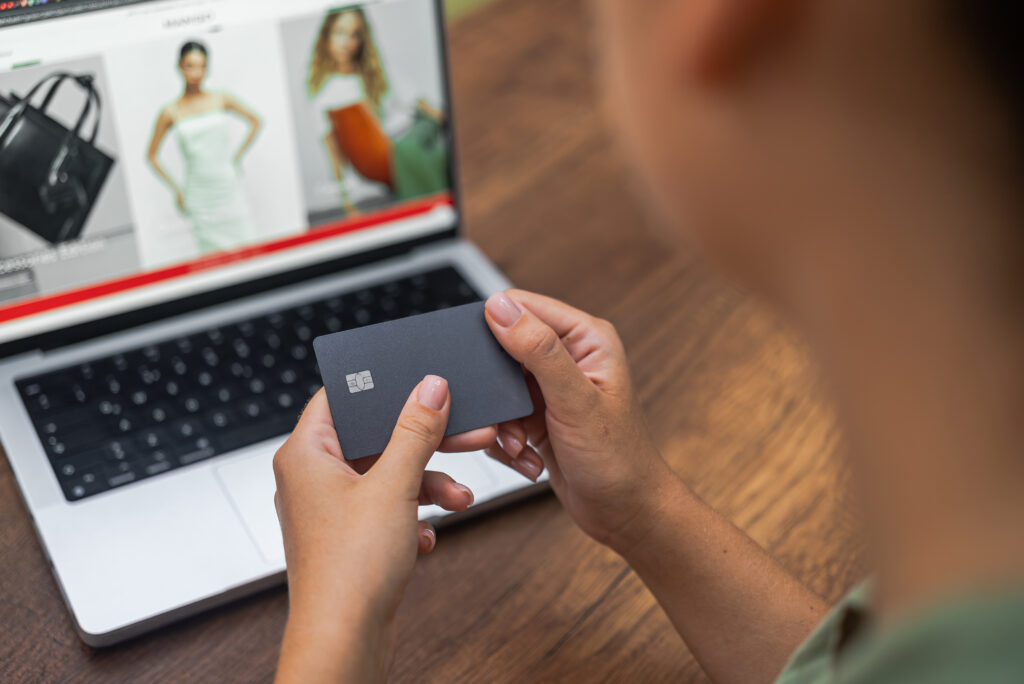
Online shopping has never been more convenient. A luxury handbag, a rare watch, or a limited-edition sneaker can be at your doorstep in 48 hours, with nothing more than a few taps on a phone. Any transactional friction that existed has been removed almost entirely. But friction and trust are not the same thing, and the trust that once felt like a natural feature of polished e-commerce platforms is now, for a growing number of buyers, a serious open question.
The era of defaulting to confidence in online purchases is ending. Buyers are increasingly skeptical before committing to high-value transactions, not because the platforms have deteriorated, but because the threat environment has changed in ways that are not immediately visible to the consumer.
Why Online Trust Is Breaking Down
Several forces have converged to undermine confidence in online authenticity verification, and each one is accelerating independently of the others.
The industrialization of high-quality counterfeiting: the replica market has moved well beyond cheap knock-offs. Today’s most sophisticated fakes, sometimes called “superfakes,” are produced using genuine raw materials, precision tooling, and, in some cases, the same manufacturer relationships used by authentic luxury houses. When a fake bag is made from the same leather and the same hardware as the original, surface-level visual inspection cannot reliably distinguish between them.
The arrival of AI-generated imagery: A product listing on a resale platform has always depended on photographs as the primary evidence of what is being sold. But photorealistic AI image generation has made it possible to create convincing, detailed product imagery of items that do not physically exist, or that look nothing like what will actually be shipped.
Marketplace scale: Consumer-to-consumer resale platforms now process millions of listings. The manual review processes that might have been adequate at lower volumes have not scaled proportionally with the growth in listings.
Taken together, these forces have created a situation where the surface signals that buyers rely on – high-quality photos, good seller reviews, platform badges, professional-looking listings – are increasingly detachable from the reality of what is being sold.
Trust as a Revenue Driver
It is tempting to treat “trust” as an abstract, feel-good concept that sits somewhere outside the core business case. The numbers say otherwise. Verified, trustworthy listings convert at meaningfully higher rates – platforms that offer credible, item-level authentication see conversion rates roughly 15 percent higher than those that rely on seller reputation alone. Buyers who are confident in what they are purchasing are also willing to pay for that confidence: verified items routinely command price premiums of around 30 percent over comparable unverified listings, because the buyer is no longer pricing in the risk of receiving a fake.
This shift is generational as much as it is behavioral. For Gen Z and Millennial shoppers, the demographic now driving the bulk of luxury resale activity, verification is not a nice-to-have feature buried in the fine print. It is close to a baseline requirement before they will commit to a high-value purchase. These are buyers who grew up alongside influencer marketing, sponsored content, and AI-generated imagery; they are, by necessity, more skeptical of polished presentation than any generation before them, and they actively seek out platforms that can prove what they claim. Put simply: trust is no longer a brand differentiator that lives in marketing copy. It is a measurable input to conversion, pricing power, and long-term customer loyalty.
What a Trustworthy Online Purchase Requires Today
Addressing the trust problem at its root requires a different architecture than the one most platforms currently offer. Platforms must build verification into the transaction itself. A genuinely trustworthy purchase in the current environment requires five things working together.
- Item-level verification – what is being authenticated is the specific object, not the seller’s track record or the platform’s general policies
- Tamper-resistant identity – the record attached to an item cannot be altered retroactively to cover a transfer or substitution
- Real-time authentication capability – verification is available at the moment of purchase, not after a multi-day review process that creates uncertainty
- Historical ownership tracking – the buyer can see not just the current claim of authenticity, but the complete documented history of the item’s lifecycle
- Cross-platform consistency – the item’s verified record remains valid and accessible regardless of which platform or channel it moves through next
How Technology Is Transforming Trust
This is the architecture that TruLux was built to deliver. Rather than adding a better reputation layer on top of existing marketplace infrastructure, TruLux assigns each luxury item a unique digital identity derived from the physical characteristics of the object itself – its material signature captured through high-accuracy AI-driven visual inspection and advanced multimodal sensing.
When an item is verified through TruLux, it receives a Digital Product Passport: a tamper-resistant record that captures authentication history, ownership transfers, and provenance data across the item’s entire lifecycle. Each time the item changes hands, the passport updates. Each time a buyer wants to verify authenticity, they are accessing actual item-level data. The practical effect is that the item itself becomes independently verifiable. A buyer does not need to trust the seller’s claim, the platform’s general standards, or the quality of the photographs. They can access the item’s documented history directly.
This is what shifts commerce from visible to verifiable. Visible commerce relies on presentation: polished listings, professional images, positive reviews. Verifiable commerce relies on data: the item’s own authenticated identity, its documented history, and a record that persists regardless of who is selling it or where.
The Shift From Listing Systems to Verification Systems
Buyers are becoming more sophisticated and more skeptical, and their skepticism is well-founded. As the gap between visible legitimacy and actual authenticity has widened, consumer confidence in online high-value purchases has eroded. The platforms that recover and grow that trust will be the ones that move to verification systems – platforms where what is sold can be independently confirmed.
The future of online commerce is about better evidence. Every object in a trustworthy marketplace should carry its own verifiable identity, readable in real time by any buyer, on any platform, at any point in the item’s lifecycle. That is the standard toward which the industry is moving, whether platforms choose to lead or follow.
Learn more about how TruLux is building the infrastructure for verifiable commerce.