
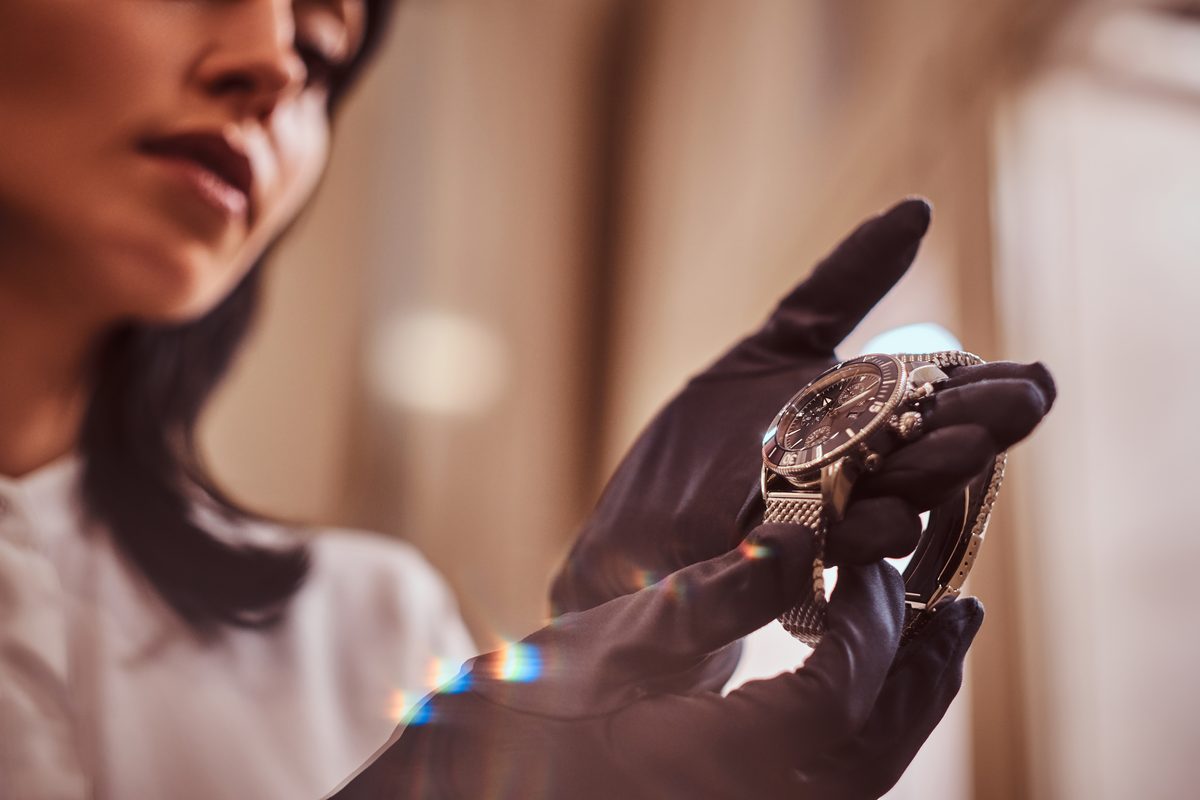
The replica industry has industrialised, and counterfeits are no longer the crude imitations they once were. Modern "superfakes" are manufactured using the same raw materials, the same tooling tolerances, and in some cases, the same supply chains as the genuine articles they imitate. When the physical inputs are nearly identical, the gap between real and fake narrows to a margin that human inspection, no matter how trained or experienced, cannot reliably close.
At the same time, luxury resale and online commerce continue to scale at a pace that makes individual expert review economically and operationally unsustainable. Platforms processing thousands of listings per day cannot assign a human specialist to every submission. The result is a growing authentication gap: a space where sophisticated fakes enter the market because the verification process simply could not keep up.
The limits of traditional authentication
For decades, luxury authentication has relied on a consistent set of approaches: human experts examining items in person, photo-based reviews submitted through digital platforms, certificates of authenticity, and serial number verification. Each of these methods carries the same structural weaknesses.
Human inspection is inherently subjective. Two experts examining the same item can reach different conclusions based on experience, fatigue, lighting conditions, or the quality of the photographs provided. At scale, this inconsistency becomes a systemic problem rather than an individual error. Manual processes are also time-intensive; authentication queues create friction that slows legitimate transactions and creates pressure to approve borderline cases quickly.
Perhaps most importantly, traditional methods are limited to visible features. They assess surface characteristics - stitching, logos, hardware finish, the feel of leather - that counterfeiters have become expert at replicating. The counterfeit market does not operate in ignorance of these checks. High-end replica producers study authentication guides, source matching materials, and specifically engineer their products to pass the exact inspections that platforms rely upon. A verification method that is public knowledge is a verification method that can be reverse-engineered.
Serial numbers and certificates have followed the same trajectory. What began as reliable identifiers have become targets for duplication. Counterfeiters now source authentic dust bags and packaging from the secondary market, replicate receipts using widely available design tools, and mass-produce serial numbers copied from genuine items found online.
The shift towards AI-driven visual inspection
The fundamental difference between human inspection and AI-driven visual analysis is depth. AI systems trained on verified examples of a specific model line can compare an item against the reference for exactly that line, at a level of detail the eye cannot hold.
AI does not simply assess what a human assessor would assess, only faster. It reads each component separately — the dial, the bezel, the rehaut — and compares print, spacing, shape and surface finish against the reference for that exact model line, flagging deviations that sit inside the range a trained eye would pass.
This is what makes TruLux's approach to authentication substantively different from digitising traditional review. TruLux works from a few guided smartphone photos and returns a verdict on every component, with no tags, no chips and nothing registered in advance. Each inspection produces not just a pass/fail verdict, but a structured data record that becomes part of the item's Digital Product Passport.
What makes AI authentication different
Traditional inspection is a point-in-time judgment made by an individual whose expertise, availability, and subjective assessment determine the outcome. It produces a conclusion without generating persistent, reusable evidence. If the item is later questioned, the original assessment cannot be audited.
AI-driven authentication is a structured analytical process that produces reproducible, documented results. Every inspection generates a record, and every data point captured contributes to a verifiable history that persists across the item's lifecycle.
| Capability | Traditional Inspection | AI-Driven Inspection |
|---|---|---|
| Analysis method | Human judgment, subjective assessment | Pattern recognition, data-driven analysis |
| Scope of inspection | Surface-level, visible features only | Component by component, each against its own reference |
| Material analysis | Touch, visual texture, weight estimation | Print, spacing, shape and surface finish |
| Consistency | Variable; affected by fatigue and experience | Uniform across every item assessed |
| Scalability | Limited by available human experts | Scales to volume without degradation in accuracy |
| Speed | Hours to days depending on queue | Real-time or near-real-time |
| Vulnerability to manipulation | High; counterfeiters study and replicate a fixed checklist of inspection criteria | Low; detection criteria evolve continuously as the model learns |
| Manufacturing deviation detection | Depends on the individual assessor | Measures each component against a verified reference |
The new standard for buyers and platforms
Soon, buyers who have experienced item-level authentication will not accept platforms that offer only seller reputation and photographs. The expectation for instant, reliable, item-specific verification is becoming a baseline rather than a differentiator. The question at the point of purchase will not be "Does this seller have good reviews?" It will be: "Can this item's identity and authentication history be verified right now?" Platforms that can answer that question with data will set the standard that the rest of the market follows.
AI-driven visual inspection, backed by persistent provenance records and item-level digital identity, is how that standard gets built.