
Component-level authentication in five minutes
Manual authentication takes a week and $300 in labour per item. TruApp returns a verdict on every component from a guided smartphone scan, in five minutes. No tags, no chips, nothing registered in advance.
Two ways to run the same check
Both run the same cloud analysis and return the same per-component report in five minutes.
TruApp
Any smartphone with a 12MP camera or better. Open the app, tap Identify and follow the prompts. The app flags any frame that will not meet diagnostic quality before you move on.
Best for: intake desks, shop floors, and anywhere with good light.
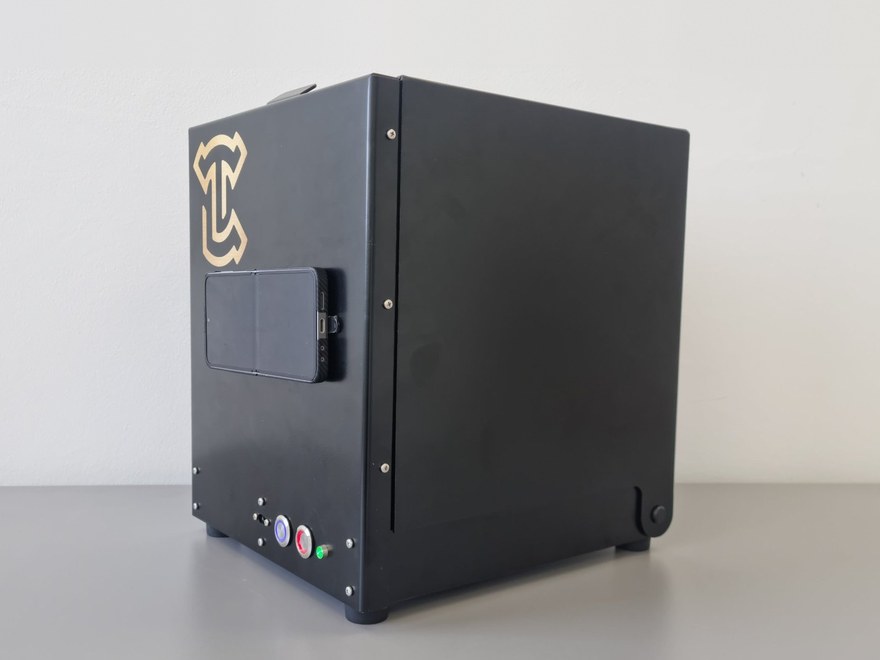
TruBox
A fixed capture station for professional and lab settings. The phone attaches by MagSafe, the item is mounted, and the app runs the scan automatically.
Best for: labs and high-volume intake, where lighting and framing have to hold across hundreds of items a day.
The routine, step by step
Find good lightA well-lit spot is the only requirement. No fixed table, background or rig.
Start the scanOpen the app and begin the capture.
Follow the guideThe app prompts for each angle and takes the photo itself once the camera is in position.
Read the reportComponent by component, with anomalies and low-confidence areas called out.
Save the decisionThe report and your call, stored for the buyer and the insurer.
Keep the fingerprintIt becomes the item's ID for the next resale or service.
What the report shows
No verdict arrives as a black box. Every scan ends in the same structured document, written to be read by someone who is not an authenticator: clear sections, plain language, no private vocabulary. It is what your buyer, your insurer, or your own team reads.
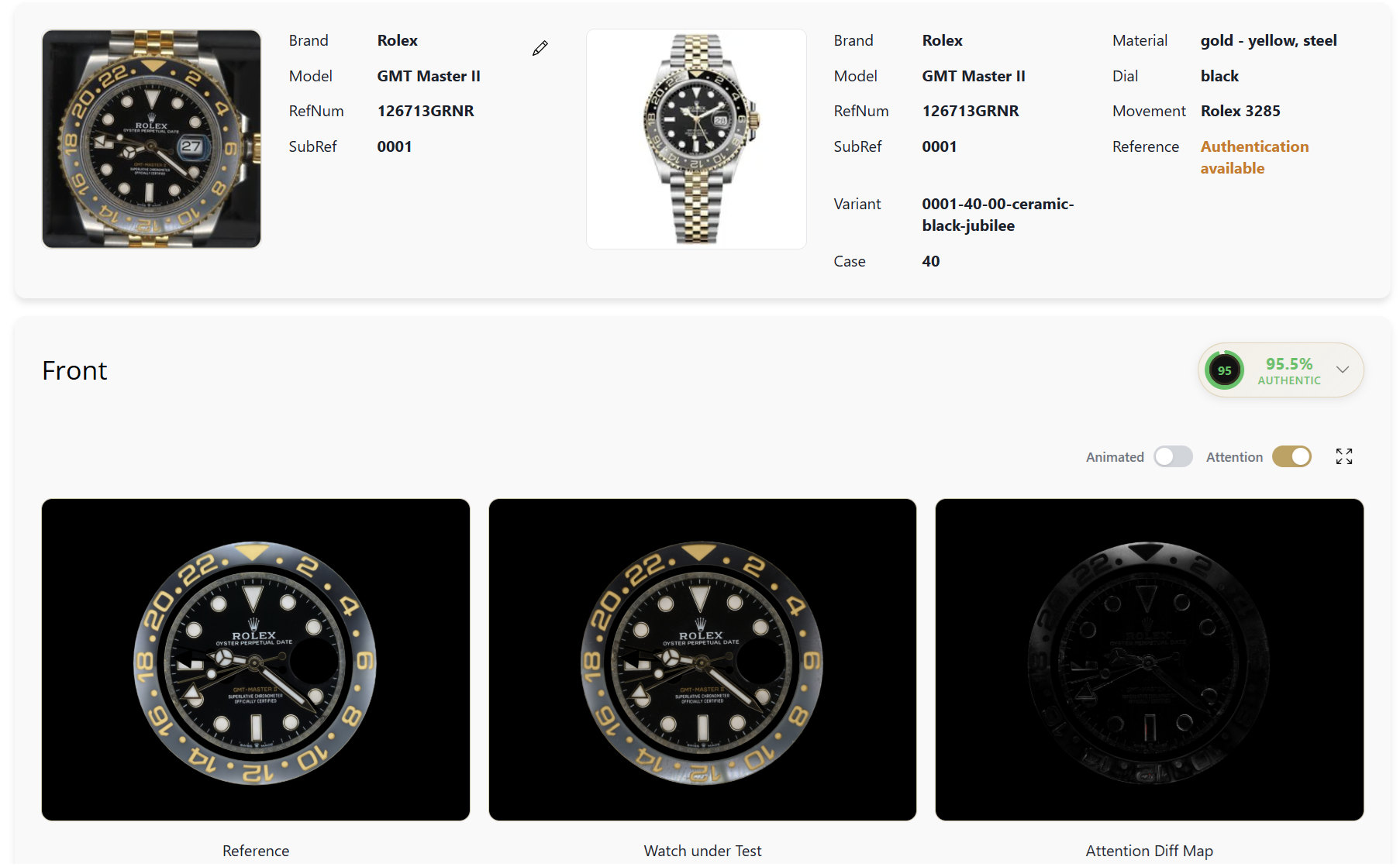
* An actual TruApp report. Rolex GMT-Master II, reference 126713GRNR, front view, authentic with high confidence of 95.5%.
The item, identified first
Before anything is judged, the item is identified: brand, model, reference and sub-reference. Everything below is measured against the genuine reference for that specific model line, not against watches in general.
A separate check for each component
Every major component (dial, bezel, rehaut and hands) gets its own standardised check and its own score. The item-level verdict follows from them. A single number for the whole item would hide the thing that matters most, which is which part disagrees with the reference. Each component carries its own learned fingerprint for that reference, and its own range of lawful variation.
Difference maps: where the two disagree
A difference map compares the item against the genuine reference for that model line and marks every place the two do not match: the shape and spacing of an index, the texture of the print, the depth of an engraving. It answers one question: where is this item not the reference?
Attention maps: what the model weighed
An attention map shows something different: the regions the model actually relied on to reach its verdict. A difference can be real and still carry little weight, and a small region can carry a lot. Read together, the two maps tell you where the item departs from the reference and how much that departure counted.
Three images for every view
For each view the report puts the images side by side: the genuine reference, the item under test, and the map over the top. You are not asked to take the verdict on trust. You can see what the model saw.
Views and variants
A model line can have legitimate variants, and the same reference can be produced in more than one configuration. The report is read per view and per variant, so a lawful variation is not reported as a discrepancy.
It tells you when it is unsure
Every verdict carries a confidence level, so the report shows where the model is strong and where it is weak. Where the evidence is thin it says so, rather than forcing a verdict it cannot support.
Book a demo
Tell us what you need to analyse and who you are, and we will follow up.
Book a demo